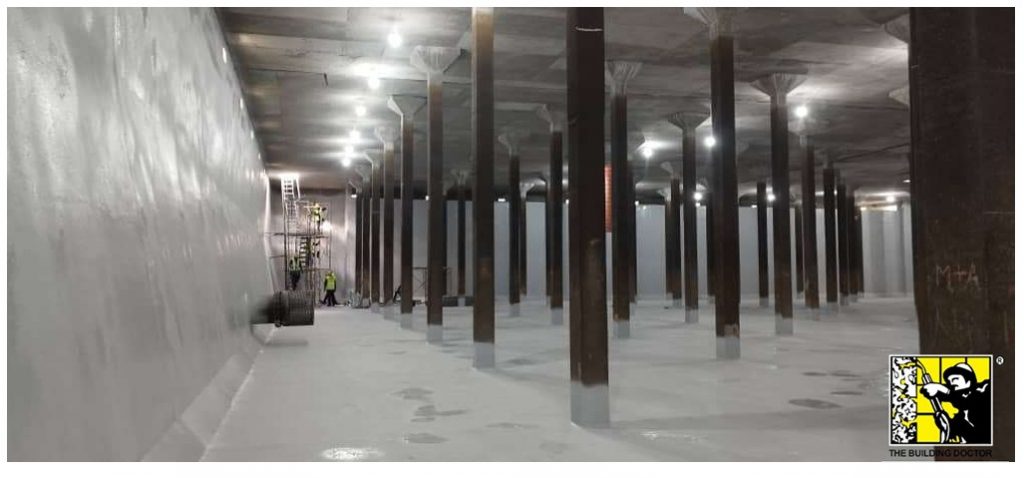
A water tank is an essential part of many residential, commercial, industrial and high-rise buildings. When a reinforced concrete water tank develops cracks, seepage or leakage, the problem should not be ignored.
Water leakage can affect the surrounding concrete and, if left untreated, may contribute to concrete deterioration and corrosion of embedded reinforcement.
At Structural Repairs (M) Sdn Bhd, we specialise in waterproofing, concrete repair, water leakage repair and structural rehabilitation. Our experience includes reinforced concrete water tank rectification, PU injection and Polyurea waterproofing systems for building and infrastructure projects throughout Malaysia.
What Is a Reinforced Concrete Water Tank?
A reinforced concrete water tank is a water storage structure constructed using concrete reinforced with steel bars or reinforcement.
Reinforced concrete water tanks are commonly found in:
- High-rise residential buildings
- Commercial buildings
- Industrial facilities
- Hotels
- Hospitals
- Shopping centres
- Institutional buildings
- Residential properties
- Fire protection systems
- Building service areas
In the construction industry, reinforced concrete is commonly abbreviated as RC. Therefore, an RC water tank simply means a reinforced concrete water tank.
Although reinforced concrete is a durable construction material, water tanks are constantly exposed to moisture and water pressure. Over time, cracks, joints, construction defects and deterioration of existing waterproofing systems can result in water leakage.
Why Does a Reinforced Concrete Water Tank Leak?
Water leakage from a concrete water tank can occur for various reasons. Identifying the actual source of leakage is important before deciding on the appropriate repair or waterproofing method.
1. Concrete Cracks
Cracks may develop due to concrete shrinkage, structural movement, temperature changes, ageing or other factors.
Depending on their location and severity, cracks can become pathways for water to pass through the tank wall or floor.
2. Construction Joints & Expansion Joints
Construction joints are potential leakage paths if they were not properly detailed, treated or maintained.
Over time, deterioration at these joints can allow water to seep through the concrete structure.
3. Honeycombing and Porous Concrete
Poor concrete placement or compaction can result in honeycombing, voids or porous concrete.
These defects may allow water to penetrate through the concrete and contribute to leakage.
4. Deteriorated Waterproofing
Existing waterproofing systems can deteriorate due to age, exposure, movement, poor adhesion, mechanical damage or other site conditions.
When the waterproofing system fails, water may penetrate into the underlying concrete.
5. Concrete Deterioration and Reinforcement Corrosion
Continued exposure to moisture can contribute to corrosion of embedded steel reinforcement.
Corrosion may cause cracking, delamination and spalling of the surrounding concrete.
6. Pipe Penetrations and Other Details
Areas around pipe penetrations, outlets, corners and other interfaces can become potential leakage points if they are not properly treated.
Signs Your Water Tank May Require Repair or Waterproofing
Water tank leakage is not always immediately obvious. Building owners, property managers and facility management teams should look for signs such as:
- Visible water leakage
- Damp patches around the tank
- Water staining
- Cracks in concrete walls or floors
- Seepage through construction joints
- Peeling or deteriorated waterproofing
- Concrete spalling
- Exposed reinforcement
- Rust staining
- Persistent moisture around the tank
Early inspection can help determine whether the problem is localised or whether the existing waterproofing system requires more extensive rehabilitation
Does Water Tank Leakage Always Mean You Need New Waterproofing?
Not necessarily.
The correct solution depends on the cause and condition of the water tank.
For example, an active crack may require injection treatment, while defective concrete may require concrete repair before waterproofing is applied.
A deteriorated waterproofing system may require surface preparation and installation of a new waterproofing system.
Therefore, simply applying another waterproofing coating over a leaking surface may not solve the underlying problem.
A proper assessment should consider:
Leakage Source → Concrete Condition → Crack & Joint Condition → Repair Method → Waterproofing System
Reinforced Concrete Water Tank Repair and Waterproofing Process
Every water tank is different, and the repair method should be selected according to the actual site condition.
A typical water tank waterproofing and rectification project may involve the following stages.
1. Inspection and Assessment
The water tank is inspected to identify:
- Cracks
- Leakage points
- Construction joints
- Honeycombing
- Defective concrete
- Existing waterproofing
- condition
- Pipe penetrations
- Areas of concrete deterioration
The objective is to identify the likely source of leakage and determine the appropriate repair approach.
2. Surface Preparation
Proper surface preparation is an important part of any waterproofing system.
Loose concrete, laitance, contaminants, deteriorated materials and other unsuitable surface materials may need to be removed.
The substrate should be properly prepared to provide a suitable surface for subsequent repair and waterproofing works.
3. Crack and Leakage Treatment
Where active water leakage is present, the leakage source should be treated before the waterproofing system is applied.
Depending on the condition, PU injection may be used to seal water-bearing cracks or joints.
PU injection can be particularly useful where water is actively passing through cracks or construction joints.
4. Concrete Repair
Where defective or deteriorated concrete is identified, suitable concrete repair works should be carried out.
This may involve removing loose concrete, treating exposed reinforcement where required and reinstating affected areas using appropriate repair materials.
The objective is to provide a sound and suitable substrate before waterproofing.
5. Treatment of Joints and Details
Construction joints, corners, pipe penetrations and other critical details require careful attention.
These areas should be properly assessed and treated because they can become potential pathways for water leakage.
6. Primer Application
Where required by the selected waterproofing system, a suitable primer is applied to the prepared substrate.
The primer helps promote adhesion between the concrete substrate and the waterproofing system.
7. Polyurea Waterproofing Application
For suitable applications, Polyurea Waterproofing can be spray-applied onto the prepared concrete surface.
Polyurea forms a continuous, seamless waterproofing layer and cures rapidly after application.
The suitability of the system depends on the intended use of the water tank, substrate condition, project requirements and selected product system.
8. Inspection and Testing
Following completion, the waterproofing system should be inspected to identify any defects or areas requiring attention.
Where required, appropriate testing can be carried out in accordance with project specifications and requirements.
Why Use Polyurea for Water Tank Waterproofing?
Polyurea is a high-performance spray-applied waterproofing technology that can be considered for various concrete waterproofing and water-retaining applications.
Seamless Waterproofing Layer
Polyurea is spray-applied and forms a continuous waterproofing layer over the prepared surface.
This eliminates conventional membrane overlaps and can reduce potential weak points associated with membrane laps.
Rapid Curing
Polyurea cures rapidly, which can help reduce waiting time and minimise disruption during refurbishment works.
This can be beneficial for projects where downtime needs to be controlled.
Flexible and High Elongation
Polyurea systems can provide flexibility and high elongation properties, allowing the waterproofing layer to accommodate certain movements of the substrate.
Strong Adhesion
When the substrate is correctly prepared and the system is properly applied, Polyurea can achieve strong adhesion to suitable concrete surfaces.
Resistance to Abrasion and Impact
Polyurea provides good resistance to abrasion and mechanical impact, making it suitable for demanding waterproofing applications.
Water Tank Waterproofing for Existing Buildings
Water tank refurbishment is often required in existing buildings where the original
waterproofing system has deteriorated or leakage has developed over time.
Depending on the condition, refurbishment works may involve:
- Removal of deteriorated waterproofing
- Concrete surface
- preparation
- Crack treatment
- PU injection
- Concrete repair
- Joint treatment
- Primer application
- Polyurea waterproofing
- Inspection and testing
The actual scope should be determined following an inspection of the existing water tank.
Our Project Experience: Water Tank Rectification Works at KLCC
Structural Repairs (M) Sdn Bhd has experience in carrying out reinforced concrete water tank rectification works.
One of our project references involved the:
Rectification Works of Reinforced Concrete Water Tank for Cold Water & Fire Protection System at Common Facilities, KLCC
The project involved rectification works to an existing reinforced concrete water tank serving the building’s cold water and fire protection system.
Working with an existing water tank requires careful consideration of the concrete condition, leakage sources and existing waterproofing before determining the appropriate repair and waterproofing approach.
Our experience in waterproofing, concrete repair and structural rehabilitation enables us to approach these projects beyond simply applying a waterproofing coating.
Why Water Tank Rectification Requires Specialist Experience
Existing reinforced concrete water tanks may develop leakage and deterioration over time due to:
- Concrete cracking
- Construction joints
- Water penetration
- Deteriorated waterproofing
- Defective concrete
- Concrete deterioration
- Ageing of the structure
The appropriate rectification method depends on the actual site condition.
For this reason, water tank repair should be approached systematically, beginning with assessment and identification of the problem before proceeding with the required repair and waterproofing works.
View Our KLCC Water Tank Project:
How Much Does Water Tank Waterproofing Cost in Malaysia?
There is no single fixed price for water tank waterproofing in Malaysia because every tank has different conditions and requirements.
Factors that can affect the cost include:
- Size and area of the water tank
- Condition of the existing concrete
- Severity and number of leaks
- Number and size of cracks
- Extent of concrete repair
- Existing waterproofing condition
- Accessibility
- Surface preparation requirements
- Waterproofing system selected
- Testing and inspection requirements
For this reason, a proper site inspection is recommended before preparing a quotation.
Why Choose Structural Repairs (M) Sdn Bhd?
Structural Repairs (M) Sdn Bhd is a Malaysia-based specialist contractor established in 1985, with experience in:
- Waterproofing
- Concrete repair
- Structural strengthening
- Structural repair
- Façade repair and restoration
- Building conservation
- Polyurea waterproofing
- Water leakage repair
Our experience includes specialised repair and waterproofing works for reinforced concrete structures and water-retaining facilities.
We combine waterproofing and concrete repair expertise to assess the condition of the substrate, identify potential leakage sources and recommend a suitable repair and waterproofing approach.
Frequently Asked Questions
What is an RC water tank?
RC stands for Reinforced Concrete. An RC water tank is a water storage tank constructed using reinforced concrete.
Why is my reinforced concrete water tank leaking?
Leakage can result from cracks, construction joints, honeycombing, porous concrete, pipe penetrations, deteriorated waterproofing or concrete deterioration. An inspection is recommended to identify the actual source.
Can cracks in a concrete water tank be repaired?
Yes. Depending on the type and condition of the crack, suitable repair methods may include PU injection, crack treatment, concrete repair or other specialised repair systems.
Is Polyurea suitable for water tank waterproofing?
Polyurea can be used for various concrete waterproofing and water-retaining applications.
However, suitability depends on the tank’s intended use, substrate condition, system specification and project requirements.
Does waterproofing fix concrete deterioration?
Waterproofing itself does not replace concrete repair. Where concrete is cracked, deteriorated or defective, the affected areas should be properly repaired and prepared before waterproofing is applied.
How long does water tank waterproofing take?
The duration depends on the size of the tank, condition of the concrete, extent of leakage, repair requirements, surface preparation and waterproofing system selected.
Do you provide water tank waterproofing in Malaysia?
Yes. Structural Repairs (M) Sdn Bhd provides reinforced concrete water tank waterproofing, concrete repair, PU injection and Polyurea waterproofing solutions for building and infrastructure projects in Malaysia.
Looking for Water Tank Waterproofing in Malaysia?
If your building has a leaking reinforced concrete water tank, deteriorated waterproofing or concrete defects, professional assessment is recommended before deciding on the repair method.
Structural Repairs (M) Sdn Bhd provides:
Water Tank Waterproofing | Water Leakage Repair | Concrete Repair | PU Injection | Polyurea Waterproofing
We provide specialist waterproofing and repair solutions for building and infrastructure projects throughout Malaysia.
Contact Structural Repairs (M) Sdn Bhd to discuss your water tank leakage, repair or waterproofing requirements.
Email us: structuralrepairs@gmail.com
Visit: https://structuralrepairs.com.my
Whatsapp: +60 12-334 9113
Based in Kuala Lumpur, serving all of Malaysia